Worcester News Column - WMRSASC CEO, Jocelyn Anderson
Winter is a distant memory the sun is shining, fields are being mowed – camping season is upon us.
I appreciate that camping is not for everyone; some prefer bedrooms to be made of brick or timber with a proper door and an ensuite, but for those of us that embrace it, camping is a brilliant, restorative break from the noise of everyday life.
Campsites vary drastically. From small ‘certified sites’ with little more than a tap to others with immaculate award-winning bathrooms and a host of onsite facilities. Some feel like you are sleeping in a car park and some are actual carparks. Some are in acres of breathtaking scenery. Most are an eclectic mix of tents, caravans, motorhomes and campervans accompanied by a vast array of camping gear – even boiling water in a whistling kettle on a gas stove brings new joy to the morning cup of tea.
The outdoors is not just for families, couples, groups of lads or seasoned expeditioners. It is also for women who want stillness, independence and a night under the stars on their own terms. One thing I have noticed over recent years is the growing number of women camping alone.
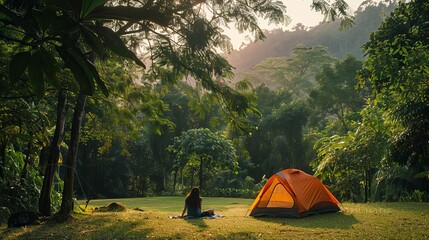
Last weekend, I chatted to a young woman on her first solo camping trip. She had set up her tent and was sat outside contentedly knitting and watching the world go by. She told me that she wanted to prove to herself that she could do it and have the courage to travel alone. We were joined by another woman who regularly camps alone, carrying on solo now that her children are adults.
There is pleasure in being answerable to no one, eating when you like, walking as far as you like, sleeping when you like, and knowing you can look after yourself. But women who camp or travel alone have to make safety an integral part of their planning.
In the 2024 Solo Female Travel Survey, personal safety was the most reported worry among women travelling alone, with a quarter of respondents saying they had feared for their safety during a solo trip. These concerns do not mean women are fearful or incapable. They mean that women are realistic.
We talked about the choice of campsite and pitch. Both women had asked to be near reception and the facilities, partly because the lighting is often better there. Neither would have felt comfortable somewhere too isolated, or too close to a group likely to be drinking late into the night. Good site design, lighting and phone signal can make a real difference.
We also talked about not needing to be rescued, questioned, pitied or treated as strange. Both women had experienced unwanted attention, patronising questions and men pitching too close or assuming they needed company “to keep safe” or that they could not manage alone. A friendly hello is welcome; persistent curiosity is not.
Both had joined online groups for solo female travellers, where women share honest feedback about campsites and destinations. These groups flag up things overlooked elsewhere including, isolated facilities, uncomfortable encounters or unhelpful staff. Safety is also about being believed when something does not feel right.
Good campsites understand this. It often comes down to practical things: clear arrival information, visible staff, well-lit routes to toilets and showers, the option to request a pitch near facilities, and a culture where women alone are treated as ordinary customers rather than curiosities.
Solo camping is not an act of bravery so much as an act of normality. Women should be able to arrive alone, choose a pitch, sleep safely and enjoy the outdoors without being treated as unusual, vulnerable or in need of supervision. For many women, the point is not to make a grand statement, but simply to pitch the tent, get the kettle on, and enjoy the peace.
Published in the Worcester News, July 2026.